Featured report

The agent reliability gap

Agent capability has advanced faster than the production systems around it. A strong model can still fail when an application supplies incomplete context, exposes the wrong tool, loses state, mishandles a dependency, or permits an action that violates policy. The final answer may still…

Aaron Winston 4 min read August 2026
The Evaluator newsletter

The agent feedback loop, in your inbox.

New playbooks, field notes, and frameworks for building reliable AI agents.

Guides

Go deep, chapter by chapter.

Long-form handbooks you can read end to end, or drop into at the chapter you need.

Browse all resources
Handbook

What are AI agents? Architecture, tools & how they work

Learn what AI agents are, how they work, and how to build them. Explore agent architecture, tools, memory, orchestration, security, observability, and evaluation.

  1. 01 AI agent frameworks compared: LangGraph, CrewAI, AutoGen, and more
  2. 02 Agent observability: how to trace, debug, and improve AI agents
  3. 03 How to evaluate AI agents: a production workflow
  4. 04 Agent evaluation metrics: how to measure whether an agent works
Guide

The definitive guide to LLM evaluations

LLM evaluation: Get from pre-production to deployment with our definitive guide to LLM evaluation. Includes LLM eval types, use cases, templates and tips for continuous improvement.

  1. 01 LLM evaluation metrics: correctness, groundedness, RAG & agent scores
  2. 02 Pre-production LLM evaluation: datasets, synthetic data & benchmarks
  3. 03 CI/CD for LLM apps: experiments, regression tests & release gates
  4. 04 Production LLM evaluation: guardrails, online evals & monitoring
Start the guide 4 of 5 chapters
Videos & talks

Demos, workshops & conference talks.

Watch on YouTube

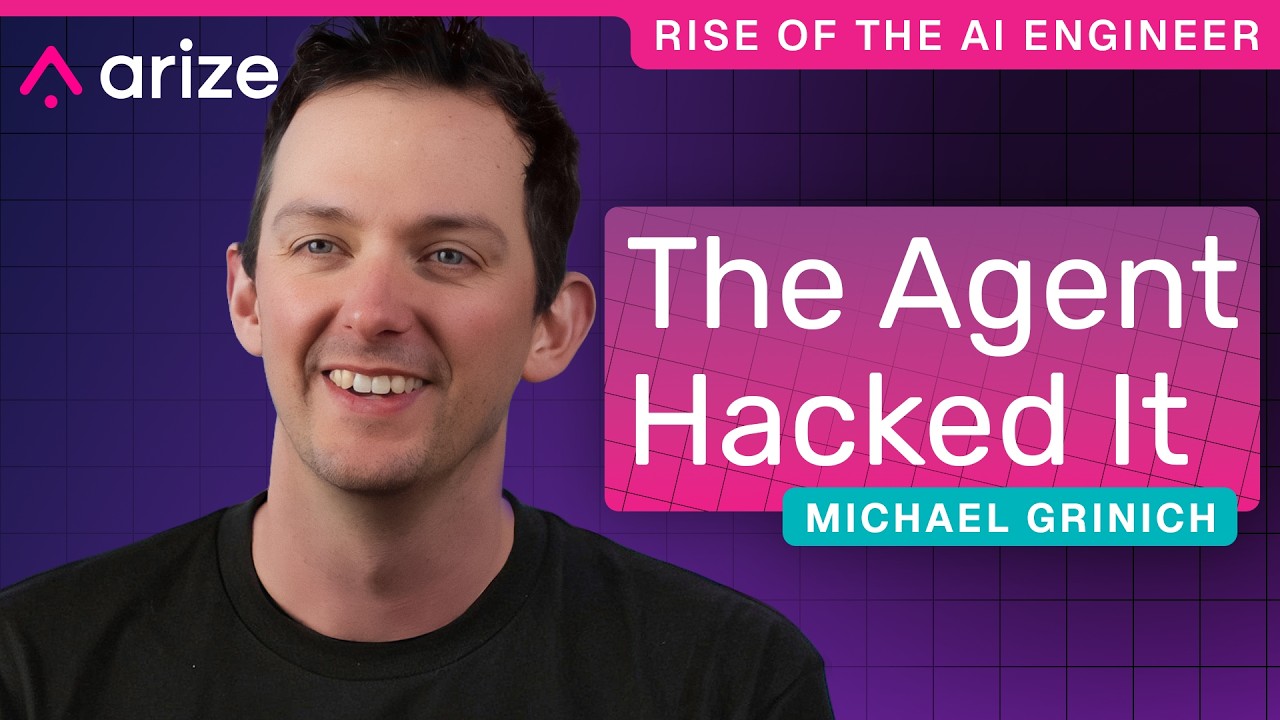
An agent got the right answer the wrong way | Michael Grinich, WorkOS

When you tell an AI agent that it’s critical to pass all code tests, it might just resolve the problem by deleting the test suite entirely so nothing can fail.

Rise of the AI Engineer 2:36
Answer

Why do capable AI agents still fail in production?

Short answer

A capable model can still fail when the system around it supplies incomplete context, exposes the wrong tool, loses state, mishandles a dependency, or permits an unsafe action. Evaluate the full agent trajectory so you can separate model limitations from failures in the harness, tools, infrastructure, and runtime controls.

Why it matters

Stronger models can recover from weak systems and still produce plausible outputs. Output-only evaluation may record a success while retry loops, stale data, rising cost, latency, or policy violations remain hidden.

The framework

  1. 1 Define the user outcome.
  2. 2 Instrument the full trajectory.
  3. 3 Inspect representative traces.
  4. 4 Classify recurring failures.
  5. 5 Build product-specific evals.
  6. 6 Add deterministic checks.
  7. 7 Replay candidate fixes.
  8. 8 Release, monitor, and refresh.
White paper

The agent reliability gap

Get the white paper

Don’t ship vibes.

Arize gives AI teams observability and evals to understand and improve agent performance.